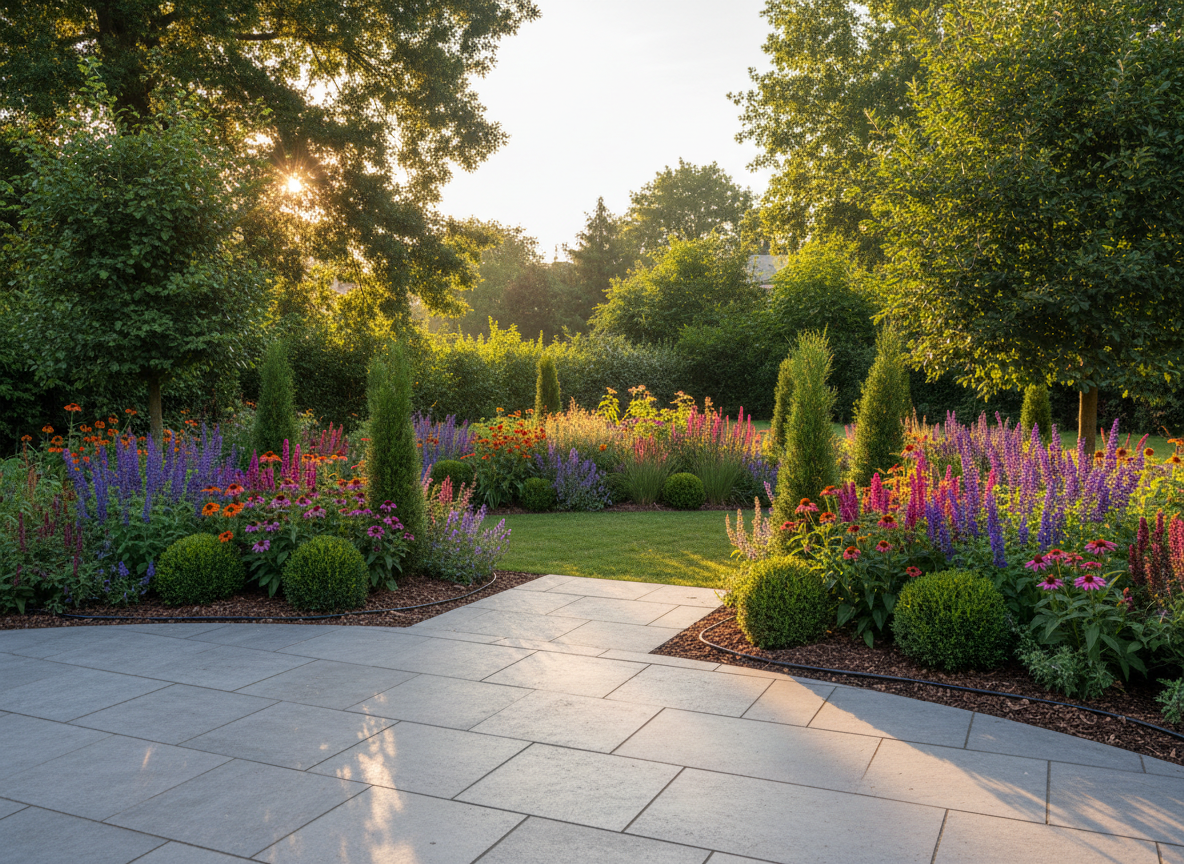
London summers are getting sharper: longer dry spells, sudden heat spikes, and the kind of glare that can turn a previously “easy” border into a weekly rescue mission. If you want a garden that still looks composed in July and August — without constant watering — heat-tolerant planting design is the answer.
Not “desert landscaping”, not a gravel-only compromise. Done properly, it is a premium, layered scheme: evergreen structure, resilient perennials, intelligent irrigation, and soil preparation that makes every litre of water count. This guide is written for SE London gardens — especially Greenwich, Blackheath, and Lewisham — where sun-traps, reflective brick walls, roof terraces, and windy exposures can push plants beyond their comfort zone.
What “Heat-Tolerant” Really Means
Heat stress and drought stress often arrive together, but they are not identical. A plant can be drought-tolerant yet struggle in reflected heat from south-facing walls or paving. Another can tolerate heat but collapse if the soil dries too far between waterings.
A heat-tolerant planting scheme is designed around three realities:
- High leaf temperature from direct sun and reflected surfaces
- Rapid moisture loss from wind and shallow soils (common on terraces)
- Interrupted watering (holidays, busy weeks, hose bans)
The goal is not “survival”. It is stability: a garden that holds its shape, colour, and texture through the hottest weeks.
Step 1: Start with Structure That Will Not Melt
In premium gardens, structure is what makes everything look intentional — especially when flowers pause. Choose a backbone that stays crisp in heat: evergreen shrubs for year-round form, architectural grasses for movement without fuss, and climbers to soften hot walls and create shade.
Design tip for SE London: in tight town gardens (common around Greenwich and parts of Lewisham), a single strong structural line — hedging, pleached forms, or repeated shrubs — can make the whole space feel calmer and more expensive.
Step 2: Fix the Soil So Watering Actually Works
If your soil is compacted, sandy, or exhausted, watering becomes a losing game. The water runs off, drains too quickly, or evaporates before roots can use it.
A heat-resilient soil strategy
Step 3: Water Less Often — But More Intelligently
Heat-tolerant gardens do not mean “no water”. They mean efficient water. For clients who want reliability and minimal hassle, drip irrigation is the gold standard: it delivers water directly to root zones, reduces evaporation and leaf scorch, works beautifully under mulch, and can be automated with timers and smart controls.
Step 4: Choose Plants by Microclimate
In SE London, microclimate matters. Two gardens a mile apart can behave completely differently. Common heat microclimates we see:
- South-facing brick walls (radiate heat into evening)
- Paved courtyards (glare + reflected heat)
- Roof terraces (wind + shallow planters)
- New-build gardens (poor soil + heat from surrounding materials)
Heat-Tolerant Plant Picks (Design-Led Categories)
Rather than a random list, here are plant types we use in resilient, premium schemes across Greenwich, Blackheath and Lewisham.
1. Architectural Anchors (Shape + Presence)
Mediterranean-style evergreens and structural shrubs that hold the design together. Upright forms for rhythm and repetition. Plants that look good even when not flowering. Use case: a Greenwich courtyard with hard lines and strong light — anchors keep it elegant, not sparse.
2. Long-Flowering Performers (Colour Without Drama)
Heat-tolerant perennials with strong stems that flower for weeks without collapsing. Varieties that keep colour even when watering is reduced. Choose plants that do not need daily deadheading. Use case: a Lewisham family garden where maintenance time is limited.
3. Silver/Grey Foliage (Natural Heat Management)
Grey foliage reflects light and reduces water loss. Soft, pale foliage to brighten hot corners. Aromatic plants that thrive in sun. Textural contrast against dark fencing or brick. Use case: Blackheath borders where the sun hits hard from midday.
4. Grasses for Movement (Low-Maintenance Polish)
Ornamental grasses are a premium trick: they look intentional, modern, and they cope well. Choose varieties that stay upright and do not flop. Use in repeated groups for a designer feel. Pair with evergreen structure for year-round impact.
Container and Roof Terrace Planting
Planters heat up fast. Soil volume is limited. Wind dries everything. For terraces in Greenwich or Deptford-style roof spaces:
- Use larger planters than you think you need (more soil = more stability)
- Prioritise wind-tolerant structure
- Add drip irrigation if the terrace is used regularly
- Use mulch even in containers (yes, it helps)
See our roof terrace design service for professional solutions.
Design Details That Make Heat-Tolerant Gardens Feel Premium
Heat resilience should not look like a compromise. A few details that elevate the finish:
- Layered heights (groundcover + mid-layer + structure)
- Restricted colour palette (calmer, more luxurious)
- Repetition (the designer's shortcut to cohesion)
- Hardscape that supports planting (shaded seating, permeable areas, planting pockets)
Maintenance During Heat Spikes
During a heat wave, the wrong maintenance can do more harm than good.
Do:
- Water early morning, deeply, less often
- Keep mulch topped up
- Remove only what is necessary
Avoid:
- Cutting back hard in extreme heat
- Feeding heavily (can push soft growth)
- Leaving irrigation unchecked
Frequently Asked Questions
Are drought-tolerant plants enough for London gardens?
Not always. London heat often comes with reflected glare from paving and walls. Heat tolerance + soil strategy + smart watering is what creates stability.
Will a heat-tolerant garden look dry or sparse?
No — when designed properly, it looks layered and intentional. Structure and repetition are what keep it premium.
Do I need irrigation?
Not in every garden, but if you want reliability (especially for terraces, new-builds, or clients who travel), drip irrigation is usually worth it.
Want a heat-resilient planting scheme for your garden?
We design heat-tolerant planting schemes for gardens across Greenwich, Blackheath, Lewisham, Brockley and Nunhead. Get in touch for a garden design consultation.
Request a Quote