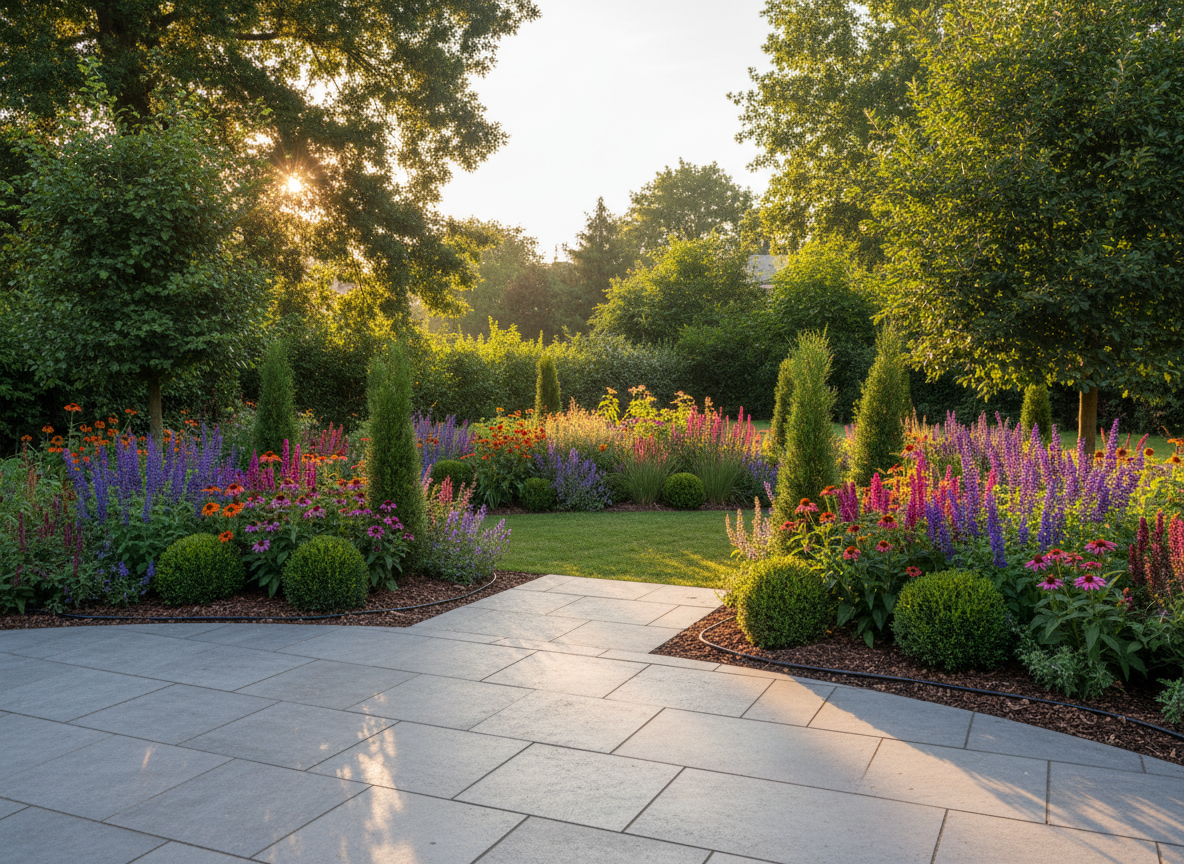
Late July marks the peak of summer stress for gardens across Greenwich, Blackheath, Lewisham, and SE London. Scorching temperatures, inconsistent rainfall, and intense sun exposure push even well-established plants to their limits. At Wicked Gardens, we've guided over 100 projects through these challenging weeks — and the difference between a thriving garden and a stressed one comes down to strategic preparation and precise maintenance.
This guide shares the exact tactics we use to keep SE London gardens resilient, beautiful, and healthy through August's peak heat.
Why Late July Is Critical for Garden Resilience
By late July, your garden has already endured weeks of summer stress. Plants are depleted, soil moisture is low, and the next 4–6 weeks will test every element of your garden's design and maintenance routine.
The challenge: Peak summer heat (often 25–30°C in SE London) combined with:
- Reduced rainfall and dry soil conditions
- Intense UV exposure stressing foliage
- Pest and disease pressure on weakened plants
- Container plants drying out in hours, not days
- Lawn stress and brown patches
The opportunity: Late July is your final window to intervene before August's peak. Strategic action now prevents costly plant loss, maintains visual appeal, and sets your garden up for autumn recovery.
1. Master Deep Watering for Heat-Stressed Plants
Shallow, frequent watering is the #1 mistake we see in SE London gardens during summer. It encourages weak root systems and leaves plants vulnerable to heat stress.
For established trees and shrubs
- Water deeply once or twice weekly, soaking the root zone to 30–45 cm depth
- Use a soaker hose or drip irrigation — never overhead sprinklers
- Water early morning (6–8 AM) or late evening (after 7 PM) to minimise evaporation
- Check soil moisture 10 cm below the surface; if dry, water immediately
For new plantings (less than 12 months old)
- Water 2–3 times weekly, deeply, to establish strong root systems
- Mulch heavily (5–7 cm) to retain moisture and cool roots
- Avoid watering foliage; direct water to soil only
For containers and roof terraces
- Check daily — containers dry out in 24–48 hours during peak heat
- Water until water drains from the base; never leave standing water
- Group containers together to create humidity and reduce evaporation
- Move containers to afternoon shade if possible
Pro tip: Install a simple drip irrigation system or soaker hose on a timer. We've seen this single upgrade reduce plant stress by 60% and cut watering time by 75%.
2. Refresh and Deepen Your Mulch Layer
Mulch is your garden's heat shield. A proper mulch layer (5–7 cm) keeps soil temperature 5–10°C cooler, retains moisture, suppresses weeds, and protects roots from temperature extremes.
- Inspect existing mulch: Has it compacted or decomposed? Refresh to 5–7 cm depth
- Use organic mulch: Bark chips, wood mulch, or composted material (never plastic)
- Avoid the stem: Keep mulch 5–10 cm away from plant stems and tree trunks
- Refresh around new plantings: New plants need 7 cm mulch for maximum protection
- Consider temporary shade cloth: For newly planted or very stressed plants, 30–50% shade cloth reduces leaf burn
3. Identify and Manage Heat-Stressed Plants
Even well-designed gardens have plants that struggle in peak heat. Late July is the time to identify them and act.
Signs of heat stress
- Wilting or drooping leaves despite adequate watering
- Leaf scorch (brown, papery leaf edges)
- Premature leaf drop
- Stunted growth or lack of flowering
- Yellowing foliage
Option A: Intensive care (2–4 weeks)
- Increase watering frequency to daily deep soaks
- Add temporary shade cloth (30–50% density)
- Prune lightly to reduce foliage load
- Feed with a balanced fertiliser to support recovery
Option B: Strategic replacement (plan for autumn)
Document the struggling plant and replace with a heat- and drought-tolerant alternative in September/October. Popular SE London alternatives include Echinacea, Salvia, Ceanothus, Pittosporum, Buxus, Ilex and Photinia.
4. Protect Lawns from Heat Stress and Brown Patches
Lawn stress is visible and demoralising. Late July is when many SE London lawns show brown patches, thin growth, and compaction stress.
- Water deeply 2–3 times weekly (not daily light sprinkling)
- Mow high: Set blades to 4–5 cm (taller grass shades soil and retains moisture)
- Avoid mowing in extreme heat: Wait for cooler mornings or evenings
- Don’t fertilise: Feeding stressed lawns encourages soft growth vulnerable to disease
- Aerate if compacted: Improves water penetration and root development
- Accept dormancy: Some browning is natural; focus on keeping roots alive for autumn recovery
For more on lawn recovery, see our guide to summer lawn recovery in SE London.
5. Pest and Disease Management During Heat Stress
Heat-stressed plants are magnets for pests and diseases. Powdery mildew, spider mites, and scale insects thrive in hot, dry conditions.
- Inspect foliage weekly — catch infestations early (underside of leaves, new growth)
- Remove affected leaves — prune out heavily infested branches
- Improve air circulation — thin overcrowded planting to reduce humidity and fungal risk
- Avoid overhead watering — wet foliage encourages fungal disease
- Use organic treatments if needed — neem oil, insecticidal soap (apply in early morning or late evening)
- Don’t overtreat — many pests naturally decline as temperatures cool in August
6. Container and Roof Terrace Strategy
Containers are the most heat-stressed element of any garden. Exposed to sun on all sides, they heat up rapidly and dry out faster than in-ground planting.
- Water daily, sometimes twice daily during peak heat
- Refresh potting soil: Old, depleted soil loses water-holding capacity; top-dress with fresh compost
- Deadhead spent flowers: Encourages continued blooming and reduces water demand
- Group containers together: Creates humidity and reduces evaporation
- Move to afternoon shade: Especially for shade-loving plants; reduces water stress
- Check drainage: Ensure pots have adequate drainage holes; standing water causes root rot
For roof terraces, wind exposure increases evaporation 2–3x compared to ground-level gardens. Use larger containers for better thermal mass and moisture retention, and consider a windbreak or shade sail for extreme exposure. See our roof terrace design service for professional solutions.
Your Late July Garden Resilience Checklist
When to Call a Professional
If your garden is showing widespread heat stress, if you're losing plants despite watering, or if you want a professional assessment of your garden's resilience — our team can help. We provide professional summer garden maintenance across Greenwich, Blackheath, Lewisham, Brockley, Nunhead and wider South East London.
For gardens that struggle every summer, consider a garden design consultation to build long-term heat resilience into your planting scheme — with drought-tolerant selections, improved irrigation, and structural evergreens that perform in every season.
Need help protecting your garden this summer?
We provide professional summer maintenance, irrigation upgrades and heat-resilience consultations across South East London. Scheduled visits, consistent teams and proactive plant care.
Request a Quote