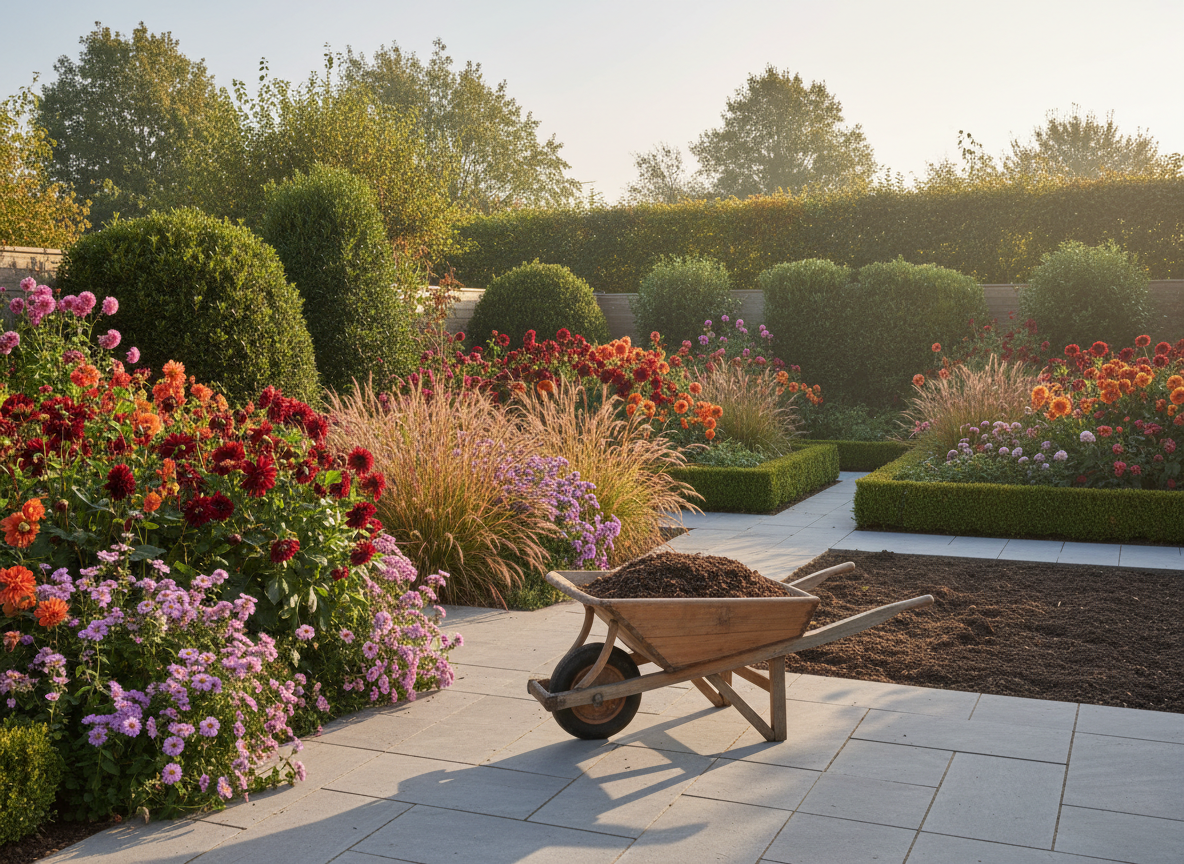
Autumn is the most important season in the garden calendar. The decisions you make between September and November determine how your garden performs through winter and into spring. In South East London — across Greenwich, Blackheath, Lewisham, Brockley and Nunhead — the unique combination of London clay soil, urban microclimates and variable autumn weather makes expert preparation even more critical.
This guide covers everything you need to do to prepare your SE London garden for autumn: soil health, mulching, planting, pruning, lawn care, hardscape maintenance and sustainable practices. Whether you handle it yourself or bring in professional support, these steps will protect your garden investment and set you up for a stunning spring.
1. Soil Health & Enrichment
Healthy soil is the foundation of every thriving garden. Autumn is the ideal time to test, amend and protect your soil before winter sets in.
Test your soil
London clay soil tends to be slightly alkaline and heavy. A simple pH test (available from any garden centre) tells you whether your soil needs amendment. Most garden plants prefer a pH of 6.0–7.0. If your soil is too alkaline, adding organic matter and sulphur-based amendments can help. If it's too acidic (rare in London), garden lime corrects the balance.
Add organic matter
Dig in well-rotted compost, leaf mould or aged manure to improve soil structure. London clay benefits enormously from organic matter — it breaks up compaction, improves drainage and adds nutrients that sustain plants through winter dormancy and into spring growth.
Mulch for winter protection
Apply a 5–7cm layer of bark mulch or garden compost to all planted borders. Mulching in autumn suppresses weeds, retains soil moisture, insulates plant roots against frost and adds organic matter as it breaks down. This single task reduces your spring workload by 30–50%.
2. Autumn-Flowering Plants for Colour Now
Autumn doesn't have to mean a bare garden. Several plants deliver spectacular colour from September through November — and many of them thrive in SE London conditions.
- Dahlias: Continue flowering until the first frost. Deadhead regularly to extend the display. Lift tubers after the first frost and store dry over winter.
- Asters (Michaelmas daisies): Clouds of purple, pink and white flowers from September to November. Excellent pollinator plants.
- Sedums (Hylotelephium): Flat-topped flower clusters that transition from pink to deep burgundy. Attract late-season butterflies.
- Ornamental grasses: Miscanthus, Stipa and Pennisetum reach their peak in autumn — feathery plumes backlit by low autumn sun.
- Japanese anemones: Elegant white and pink flowers on tall stems. Thrive in partial shade — perfect for north-facing London gardens.
- Cyclamen hederifolium: Delicate pink flowers followed by decorative marbled foliage. Naturalises beautifully under trees and shrubs.
3. Spring Bulb Planting — Your September to November Window
Autumn is the only time to plant spring-flowering bulbs. The planting window runs from September to November, with different bulbs requiring different timing:
- September–October: Daffodils, crocuses, alliums, grape hyacinths (Muscari)
- October–November: Tulips (plant late to avoid tulip fire disease)
- September–November: Snowdrops (plant 'in the green' if available), winter aconites
Planting depth: As a general rule, plant bulbs at a depth of 2–3 times their height. In London clay, add a handful of grit to the planting hole to improve drainage and prevent waterlogging.
Design tip: Plant bulbs in drifts of 10–20 rather than single rows. Layer different varieties at different depths for continuous spring colour from February through May.
4. Pruning & Deadheading Strategies
Autumn pruning requires care — cutting at the wrong time can expose plants to frost damage or remove next year's flower buds. Here's what to prune now and what to leave.
Prune now
- Rambling roses — prune after flowering, removing old flowered stems
- Summer-fruiting raspberries — cut spent canes to ground level
- Wisteria — second prune of the year: shorten summer growth to 2–3 buds
- Perennials that have finished — cut back to ground level (Geranium, Alchemilla)
- Remove dead, diseased or crossing branches from any tree or shrub
Leave until spring
- Hydrangeas — old flower heads protect buds from frost; prune in March
- Ornamental grasses — leave standing for winter structure and wildlife habitat
- Lavender — avoid cutting into old wood in autumn; shape in spring
- Tender plants — leave foliage on to protect crowns from frost
5. Lawn Care — Autumn Essentials
Autumn is the most important season for lawn care. The work you do now determines how your lawn looks in spring.
- Aerate: Relieve compaction caused by summer use. A garden fork works for small lawns; hollow-tine aeration is more effective for larger areas. This is essential for London clay.
- Scarify: Remove thatch and moss that has built up over summer. Scarifying in September allows the lawn to recover before winter dormancy.
- Overseed: Fill bare patches with quality grass seed. September is the ideal window — warm soil and autumn moisture give seed the best chance of establishing.
- Apply autumn feed: Use a high-potassium autumn lawn fertiliser (not high-nitrogen spring feed). Potassium strengthens roots and improves frost resistance.
- Final mow: Gradually raise the mowing height through autumn. The last mow of the season should leave the grass slightly longer than summer height — this protects crowns from frost.
- Clear leaves: Remove fallen leaves regularly. A layer of wet leaves smothers grass, encourages moss and creates disease conditions.
6. Hardscape & Surface Maintenance
Before winter weather arrives, give your hard surfaces attention:
- Pressure wash patios and paths to remove summer algae and moss
- Re-point any loose or damaged paving joints
- Check drainage channels and clear any blockages
- Oil or stain timber decking before the wet season
- Inspect fencing for damage and repair before winter storms
- Clean and store outdoor furniture or cover with waterproof covers
- Drain and winterise irrigation systems to prevent frost damage
7. Evergreen Structure — Year-Round Interest
Autumn is the perfect time to assess your garden's evergreen structure. As deciduous plants drop their leaves, the gaps in your planting scheme become obvious. Fill them now with container-grown evergreens that establish well in autumn's cooler, wetter conditions.
- Pittosporum tenuifolium: Screening and structure — compact, elegant, handles London conditions well
- Sarcococca confusa: Shade-tolerant with intensely fragrant winter flowers
- Viburnum tinus: Winter-flowering evergreen — clusters of white flowers from November to March
- Fatsia japonica: Bold architectural foliage for deep shade — one of the best shade evergreens for London
- Taxus baccata (Yew): Classic formal hedging — dense, dark green, clips beautifully
For more evergreen recommendations, see our guide to evergreen plants for year-round structure in London gardens.
8. Sustainable Autumn Practices
Autumn is the ideal season to adopt sustainable gardening practices that benefit both your garden and the environment.
- Composting: Start or top up your compost bin with autumn leaves, spent plants and kitchen waste. Leaf mould — made by composting leaves separately — is one of the best soil conditioners available, and it's free.
- Water conservation: Install or check rainwater butts before winter rains arrive. Collected rainwater is better for plants than tap water and reduces your water bill.
- Wildlife habitat: Leave seed heads on perennials and grasses for birds. Create log piles for hedgehogs and insects. Avoid tidying every corner — a slightly wild edge provides essential winter habitat.
- Eco-friendly pest management: Encourage natural predators by planting for biodiversity. Avoid chemical pesticides — they harm beneficial insects alongside pests.
Your Autumn Preparation Checklist
When to Call a Professional
If your garden needs more than a seasonal tidy — structural planting, drainage improvements, hardscape repairs or a complete autumn refresh — our team can help. We provide professional autumn garden maintenance across Greenwich, Blackheath, Lewisham, Brockley, Nunhead and wider South East London.
Ready to prepare your garden for autumn?
We provide professional autumn preparation across South East London — soil testing, mulching, planting, pruning and full seasonal maintenance packages. Scheduled visits, consistent teams and proactive plant care.
Request a Quote