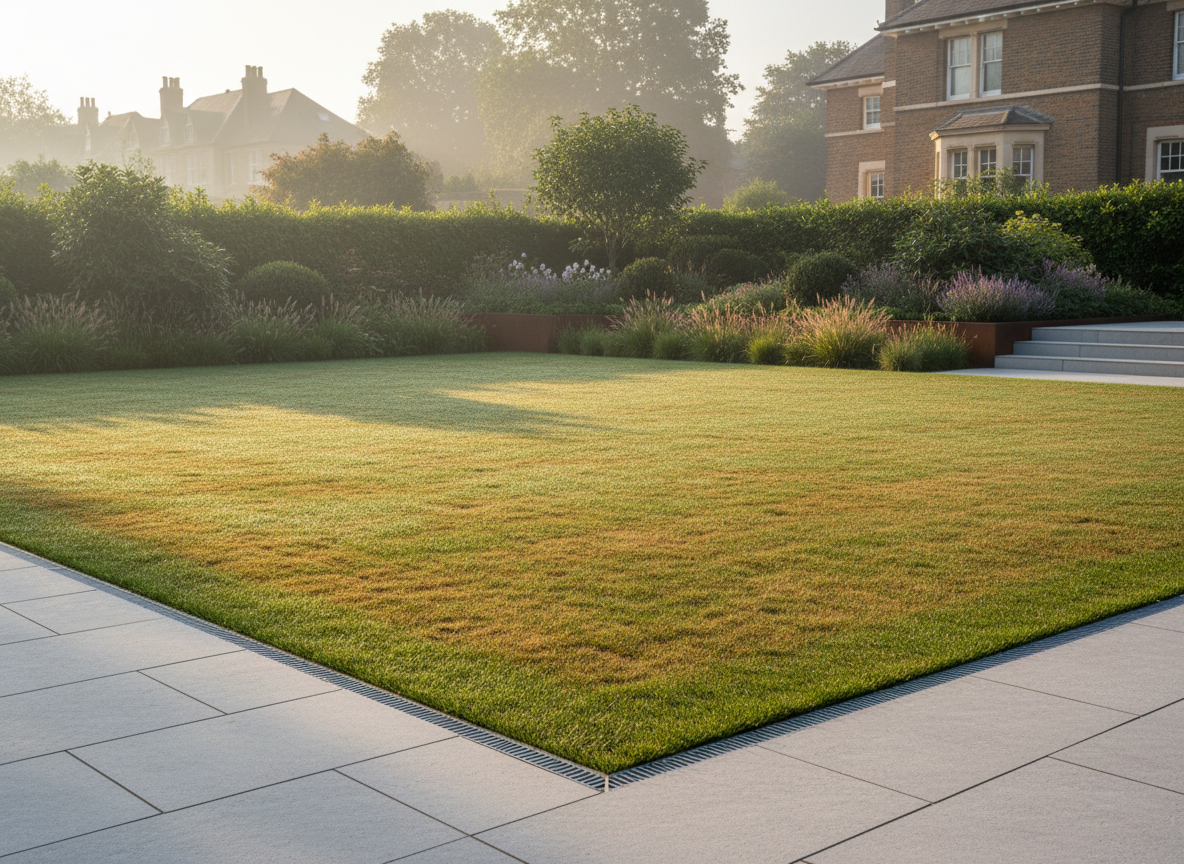
A lawn in late July doesn't fail overnight. It declines in stages: the first pale patches, the crunchy edges along paving, the thinning where the sun hits hardest. In SE London, we see the same pattern every summer across Greenwich, Blackheath, Lewisham, Brockley, Nunhead and Deptford—especially in gardens with shallow topsoil, compacted ground, or full-sun exposure.
The good news: most summer lawn problems are reversible if you treat the cause (water management, compaction, mowing height, and soil health) rather than chasing quick fixes. This guide explains how to stabilise a stressed lawn now, recover it properly, and set it up to cope with heat and dry spells—without wasting water.
Why lawns struggle in SE London summers
A lawn is a living surface. In hot, bright weather it loses moisture faster than the roots can replace it. Stress increases when any of the following are true:
- Soil is compacted (common after building works or heavy foot traffic)
- The lawn is cut too short (scalping exposes crowns and dries the surface)
- Watering is frequent but shallow (roots stay near the surface and burn out)
- The lawn is sitting on poor subsoil or rubble from past landscaping
- There's intense reflected heat from patios, walls, or raised beds
In many Greenwich and Blackheath gardens, we also see lawns installed over thin, sandy topsoil. It drains quickly, which is great in winter—but in summer it can become hydrophobic (water runs off rather than soaking in).
Step 1: Diagnose what you're seeing (before you water more)
Not all brown patches mean “needs water”. Start with a quick check:
- Footprint test: walk across the lawn. If footprints remain visible, the grass is under drought stress.
- Screwdriver test: push a screwdriver into the soil. If you can't get it in easily, the ground is compacted and water isn't penetrating.
- Pull test: tug a small tuft. If it lifts like a carpet, you may have chafer grubs or leatherjackets.
- Edge pattern: browning along paving edges often indicates heat reflection and shallow roots.
If you suspect pests, don't blanket-treat. Get the diagnosis right first—then act.
Step 2: Water properly (deep, infrequent, and early)
If you water a lawn every day for 10 minutes, you train it to grow shallow roots. That's the opposite of resilience.
The watering approach we recommend
- Water early morning (ideally before 9am)
- Water deeply so moisture reaches the root zone
- Water less often so roots are encouraged to grow down
As a rule of thumb, aim for one thorough soak rather than multiple light sprays.
How to tell if you've watered enough
After watering, repeat the screwdriver test. You want moisture to penetrate several centimetres down, not just wet the surface.
If water runs off
If you see pooling or runoff, the soil may be compacted or hydrophobic. In that case:
- Pause watering
- Aerate (see below)
- Apply a wetting agent only if needed (and only after confirming the soil issue)
Step 3: Raise your mowing height immediately
In summer, mowing too short is one of the fastest ways to weaken a lawn.
- Raise the mower height so the lawn stays longer and denser
- Avoid cutting more than one third of the grass height in a single mow
- Keep blades sharp (torn tips lose moisture and look grey)
A slightly longer lawn shades the soil, reduces evaporation, and protects the crown of the grass plant.
Step 4: Aerate compacted lawns (the real fix for “it never improves”)
If your lawn always looks tired in summer—despite watering—compaction is often the reason.
Signs you need aeration
- Water sits on the surface
- The lawn feels hard underfoot
- Moss returns quickly in cooler months
- The lawn thins in high-traffic areas
What aeration does
- Opens channels for water and oxygen
- Improves root growth
- Helps the lawn recover faster after heat
For small lawns, a garden fork can help. For larger lawns or persistent compaction, hollow-tine aeration is more effective.
Step 5: Feed carefully (don't force growth in a heatwave)
Feeding at the wrong time can stress a lawn further.
- Avoid high-nitrogen feeds during extreme heat
- If the lawn is actively growing, use a balanced summer feed
- If growth has stalled, focus on water and soil first
If you're planning a bigger recovery, the best feeding window is often late summer/early autumn—when nights cool and moisture returns.
Step 6: Repair thin patches the right way (and at the right time)
Overseeding in peak heat is rarely successful. Seed needs consistent moisture and mild temperatures.
Best timing
Late August to September is typically ideal in London.
What to do now
- Stabilise the lawn (watering + mowing height)
- Reduce compaction
- Plan overseeding once conditions improve
If you need the lawn to look presentable now (for entertaining or property presentation), we can advise on a staged approach that improves appearance without wasting seed.
Step 7: Consider whether a lawn is the right choice for the space
In some SE London gardens, a lawn is fighting the site:
- Full sun + shallow soil + high foot traffic
- Heavy shade from mature trees
- Roof terraces or raised planters with limited soil depth
In those cases, we often design alternatives that look cleaner and stay greener with less input:
- Structured planting with drought-tolerant groundcovers
- Gravel gardens with evergreen structure
- Low-water meadows (where appropriate)
- Mixed surfaces (small lawn + planting + paving) for a premium, intentional layout
If you're already thinking about a redesign, lawn performance is a useful signal: it tells you what the site can realistically support.
A premium, practical lawn recovery plan (what we do for clients)
For clients in Greenwich, Blackheath and Lewisham, our lawn recovery work typically follows a clear sequence:
- 1Assess soil depth, compaction, drainage, and sun exposure
- 2Correct mowing height and watering strategy
- 3Aerate and improve soil structure
- 4Topdress where needed to level and improve root zone
- 5Overseed in the correct window
- 6Set a maintenance plan that keeps the lawn stable year-round
If you want a lawn that looks calm and consistent—not perfect for a week, then patchy again—this is the approach that works.
Need help with lawn recovery or a more resilient garden layout?
If your lawn is struggling every summer, we can help you decide whether it needs recovery work, irrigation improvements, or a design-led change that reduces water demand while keeping the garden looking premium. We cover Greenwich, Blackheath, Lewisham and surrounding areas.
Request a Free Quote